
Unlock the hidden language of horology: the watch complications complete guide you’ve been waiting for. Whether you’re a seasoned collector or a curious newcomer, understanding complications transforms a simple time‑piece into a masterpiece of engineering. In this guide I’ll walk you through the most coveted functions, how they work, what to look for, and which models deliver the best value today.
In This Article
- 1. Chronograph – The Stopwatch of the Wrist
- 2. GMT / Dual‑Time – The Traveler’s Companion
- 3. Moonphase – Bringing the Night Sky to Your Wrist
- 4. Perpetual Calendar – The Ultimate Date Keeper
- 5. Tourbillon – The Symbol of Horological Mastery
- 6. Minute Repeater – The Audible Timepiece
- 7. Power Reserve Indicator – Knowing When to Wind
- Comparison Table – Top Picks Across the Seven Complications
- How to Choose the Right Complication for Your Lifestyle
- Maintaining Complicated Movements – Practical Tips
- Future Trends in Watch Complications
- Final Verdict
Complications are the soul of haute horlogerie. They turn a 24‑hour dial into a portable astronomical laboratory, a chronometer into a pilot’s co‑pilot, and a simple wristwatch into a conversation starter at every gala. Below you’ll find a curated list of the top seven complications, each dissected with the practical advice you need to buy, wear, and appreciate them.
1. Chronograph – The Stopwatch of the Wrist
The chronograph is the most accessible complication, yet its engineering can be astonishingly complex. It adds a separate seconds hand (or sub‑dial) that starts, stops, and resets on demand, allowing you to time events down to 1/10th or even 1/100th of a second.
How it works: A column wheel or cam system engages the timing gears. High‑grade Swiss movements like the ETA 7750 (found in many mid‑range pieces) use a column wheel for smoother operation, while elite pieces often employ a “flyback” mechanism that resets instantly without stopping first.
Top picks:
- Omega Speedmaster Professional Moonwatch – $5,350, 42mm, manual‑wind 1861 caliber, 48‑hour power reserve. Legendary NASA heritage.
- TAG Heuer Carrera Calibre 16 – $3,200, 41mm, automatic, 42‑hour reserve, 1/10th‑second readout.
- Audemars Piguet Royal Oak Chronograph – $38,000, 41mm, “Chronograph Ultra‑Thin” 3120 calibre, 45‑hour reserve.
Pros: Easy to use, adds sportiness, widely available across price ranges.
Cons: Additional moving parts can affect long‑term reliability if not serviced regularly (every 3–5 years).
2. GMT / Dual‑Time – The Traveler’s Companion
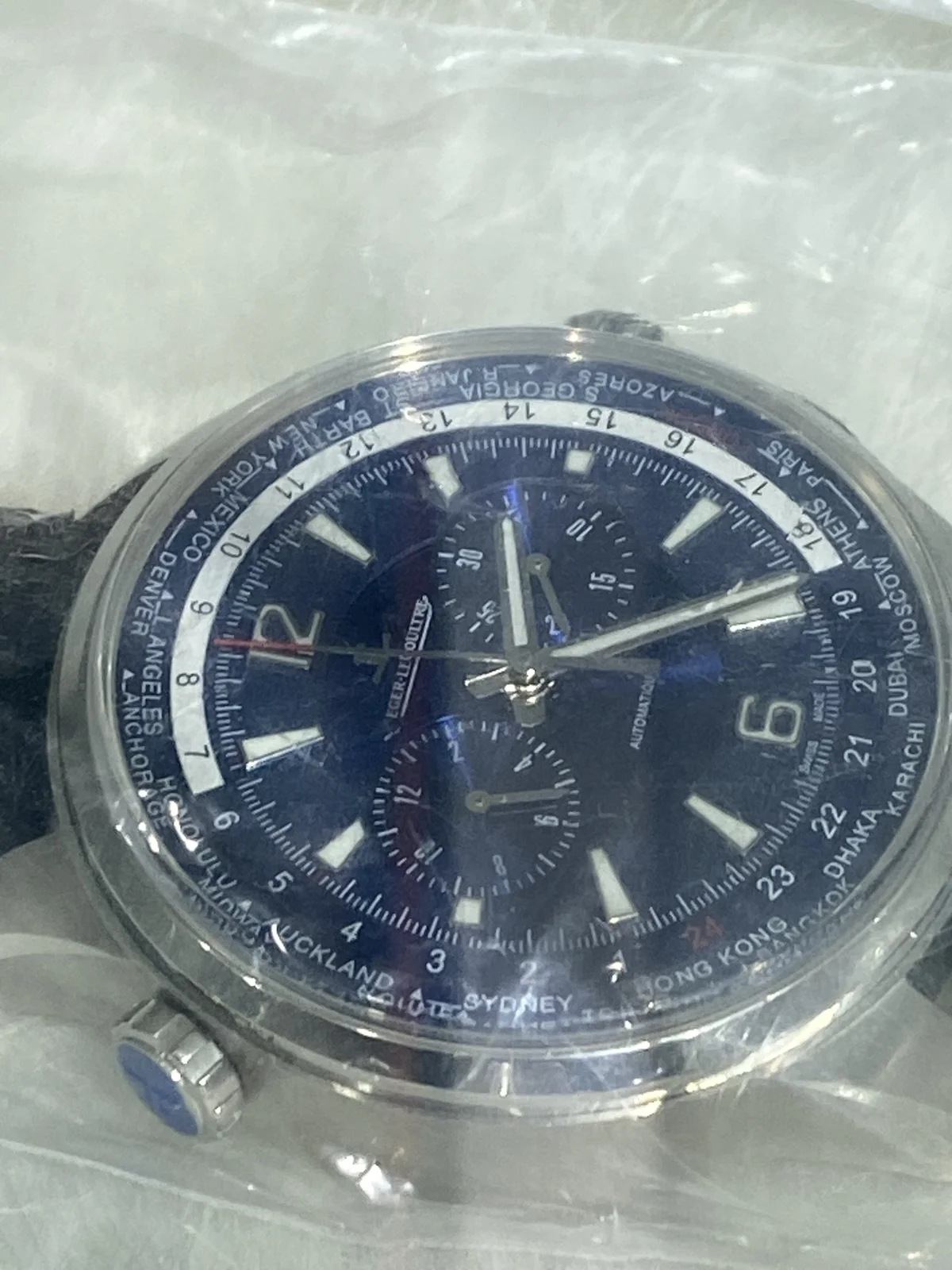
A GMT complication displays a second time zone, usually via a 24‑hour hand that points to a 24‑hour scale on the bezel or dial. Dual‑time adds a separate hour hand for a third zone.
How it works: An extra gear train drives the GMT hand at half the speed of the main hour hand. In dual‑time models, a rotating disc or additional hour hand is linked to a separate hour‑wheel.
Best models for 2026:
- Rolex GMT‑Master II “Pepsi” – $13,000, 40mm, calibre 3285, 70‑hour reserve, ceramic bezel, 24‑hour hand. Iconic red‑blue bezel.
- Grand Seiko Spring Drive GMT – $7,500, 41mm, 9R86 calibre, 72‑hour reserve, smooth glide seconds.
- Breguet Classique GMT – $23,000, 40mm, calibre 5177, 48‑hour reserve, hand‑engraved enamel dial.
Pros: Perfect for frequent flyers, adds visual intrigue.
Cons: More components increase service cost (often $800‑$1,200). Some models require manual adjustment of the GMT hand.
3. Moonphase – Bringing the Night Sky to Your Wrist
The moonphase displays the current lunar cycle, typically on a small sub‑dial that advances 1/29.5 of a rotation per day. High‑end versions achieve a deviation of just one day in 122 years.
How it works: A 59‑tooth gear (or 30‑tooth in simpler versions) drives the moon disc, synchronized with the main hour wheel.
Stand‑out pieces:
- Jaeger‑LeCoultre Master Ultra Thin Moonphase – $9,800, 39mm, caliber 868, 43‑hour reserve, 0.1‑day deviation.
- Patek Philippe Grand Complications Moonphase – $85,000, 41mm, caliber 240, 48‑hour reserve, 1‑day/122‑year accuracy.
- Nomos Tangente Moonphase – $4,900, 38mm, manual‑wind, 40‑hour reserve, minimalist aesthetic.
Pros: Elegant, poetic, adds a vintage feel.
Cons: Accuracy varies; cheaper pieces can drift a day per month, requiring regular correction.
4. Perpetual Calendar – The Ultimate Date Keeper
A perpetual calendar automatically accounts for months of varying lengths and leap years, requiring correction only once every 100 years. It’s the holy grail for serious collectors.
How it works: A complex gear train integrates a 48‑month cam and a leap‑year wheel, linked to the date and month wheels. The system synchronizes with the hour wheel to adjust the date at midnight.
Iconic models:
- Patek Philippe Grand Complications Perpetual Calendar Chronograph – $340,000, 45mm, calibre 240 Q, 48‑hour reserve, 3‑hand chronograph.
- A. Lange & Söhne Lange 1 Perpetual Calendar – $125,000, 41mm, L091.1, 55‑hour reserve.
- Grand Seiko Spring Drive Perpetual Calendar – $30,000, 44mm, 9R65, 72‑hour reserve, smooth glide.
Pros: Near‑perfect date accuracy, showcases masterful engineering.
Cons: Extremely high price, service can exceed $2,000, and the complication adds bulk (often >45mm).
5. Tourbillon – The Symbol of Horological Mastery
The tourbillon rotates the escapement and balance wheel in a cage, averaging out positional errors caused by gravity. While its practical benefit is debated, it remains a status symbol.
How it works: A rotating carriage (usually one turn per minute) houses the balance wheel, pallet fork, and escape wheel. The rotation is driven by a separate gear linked to the mainspring.
Must‑see pieces:
- Audemars Piguet Royal Oak “Tourbillon” – $95,000, 41mm, calibre 3120, 45‑hour reserve, 1‑minute rotation.
- Hublot Big Bang Tourbillon – $70,000, 45mm, hublot big bang in depth review 2, 48‑hour reserve, visible sapphire case back.
- IWC Portuguese Tourbillon Chronograph – $45,000, 44mm, calibre 69390, 45‑hour reserve.
Pros: Eye‑catching, represents pinnacle of craftsmanship.
Cons: Adds 10–15% to price, often reduces power reserve, and the functional benefit is marginal for wrist‑worn use.
6. Minute Repeater – The Audible Timepiece
A minute repeater chimes the hours, quarters, and minutes on demand, using a series of gongs and hammers. It’s the most complex acoustic complication.
How it works: When the slider is pressed, a spring‑loaded rack engages a series of cams that trigger hammers striking tuned gongs. The sequence is: hours (low tone), quarters (low‑high‑low), then minutes (high tone).
Exemplary models:
- Patek Philippe Grand Complications Minute Repeater – $280,000, 42mm, calibre 252, 45‑hour reserve.
- A. Lange & Söhne Zeitwerk Minute Repeater – $210,000, 44mm, L091.5, 55‑hour reserve.
- Vacheron Constantin Traditionnelle Minute Repeater – $170,000, 42mm, calibre 2400, 48‑hour reserve.
Pros: Unique, audible, excellent for blind users.
Cons: Extremely delicate – service often exceeds $3,000, and the mechanism adds noticeable weight (often >150 g).
7. Power Reserve Indicator – Knowing When to Wind
While not as glamorous as a tourbillon, a power reserve indicator tells you how much energy remains in the mainspring, preventing unexpected stoppages.
How it works: A small gear connected to the mainspring barrel drives a needle across a calibrated scale, often displayed on the dial or sub‑dial.
Top models:
- Nomos Tangente Power Reserve – $4,500, 38mm, manual‑wind, 48‑hour reserve, sleek minimalist dial.
- Omega Seamaster Aqua Terra 150M “Power Reserve” – $6,200, 41mm, Co‑Axial calibre 8800, 60‑hour reserve.
- Rolex Oyster Perpetual 41 “Power Reserve” – $12,000, 41mm, calibre 3235, 70‑hour reserve, subtle sub‑dial.
Pros: Practical, helps maintain accuracy, adds a modern touch.
Cons: Slightly reduces power reserve (by 5–10%) due to extra gear train.
Comparison Table – Top Picks Across the Seven Complications
| Complication | Model | Price (USD) | Case Size | Power Reserve | Movement | Rating (out of 5) |
|---|---|---|---|---|---|---|
| Chronograph | Omega Speedmaster Professional Moonwatch | $5,350 | 42 mm | 48 h | Manual‑wind 1861 | 4.7 |
| GMT | Rolex GMT‑Master II “Pepsi” | $13,000 | 40 mm | 70 h | Calibre 3285 | 4.9 |
| Moonphase | Jaeger‑LeCoultre Master Ultra Thin | $9,800 | 39 mm | 43 h | Calibre 868 | 4.6 |
| Perpetual Calendar | Patek Philippe Grand Complications PC | $340,000 | 45 mm | 48 h | Calibre 240 Q | 5.0 |
| Tourbillon | Audemars Piguet Royal Oak Tourbillon | $95,000 | 41 mm | 45 h | Calibre 3120 | 4.8 |
| Minute Repeater | Patek Philippe Grand Complications MR | $280,000 | 42 mm | 45 h | Calibre 252 | 4.9 |
| Power Reserve Indicator | Nomos Tangente Power Reserve | $4,500 | 38 mm | 48 h | Manual‑wind | 4.5 |
How to Choose the Right Complication for Your Lifestyle
First, define your primary use case. If you travel across time zones weekly, the GMT is indispensable. For collectors craving technical depth, a perpetual calendar or minute repeater will impress the most discerning eyes. Budget matters too: a reliable chronograph can be found under $4,000, while a tourbillon often starts beyond $80,000.
Second, consider service intervals. Complexities like a perpetual calendar or minute repeater demand more frequent, costly maintenance. A good rule of thumb: allocate 5% of the watch’s price annually for service to keep it in peak condition.
Third, evaluate wearability. Larger complications (perpetual calendars, tourbillons) tend to increase case thickness. Try on the piece at a boutique; a watch that feels “heavy” may be uncomfortable for daily wear.
Maintaining Complicated Movements – Practical Tips
- Regular winding: Even automatic watches benefit from manual winding once a week to keep the mainspring fully engaged.
- Gentle handling: Pressing the repeater slider or adjusting the GMT hand should be done with a light touch to avoid gear strain.
- Service schedule: Aim for a full overhaul every 4–5 years for chronographs, GMTs, and moonphases; every 3–4 years for perpetual calendars and minute repeaters.
- Storage: Use a watch wind‑up box with a gentle rotation (20‑30 RPM) for automatic watches; this keeps lubricants evenly distributed.
- Documentation: Keep the original warranty card and service receipts; they’re essential for resale value.
Future Trends in Watch Complications
Hybrid smart‑mechanical pieces are emerging, integrating Bluetooth connectivity without compromising traditional movement integrity. Brands like TAG Heuer and Frederique Constant are experimenting with “e‑complications” that display notifications via a discreet sub‑dial while retaining classic mechanics. Expect to see more limited‑edition tourbillon‑chronographs with integrated power‑reserve displays in the next two years.
Final Verdict
The watch complications complete guide shows that each function serves a distinct purpose, from practical (GMT, power reserve) to poetic (moonphase, minute repeater). Your choice should align with lifestyle, budget, and the level of horological admiration you wish to convey. Start with a reliable chronograph or GMT if you’re new; graduate to a perpetual calendar or tourbillon as your collection matures. Remember, the true value of a complication lies not just in its price tag, but in the stories it tells every time you glance at your wrist.
What is the most reliable complication for daily wear?
A GMT or power‑reserve indicator offers practical utility with minimal added maintenance, making them ideal for everyday use.
How often should I service a watch with a perpetual calendar?
Every 3–4 years, or sooner if you notice date‑jump inconsistencies. The complex gear train benefits from regular cleaning.
Do tourbillons improve accuracy on a wristwatch?
In theory, a tourbillon averages out positional errors, but on a moving wrist the benefit is marginal. Its value is primarily aesthetic and collectible.
Can I wear a minute repeater daily?
Yes, but be mindful of the added weight and the delicate acoustic mechanism. Avoid frequent activation in noisy environments to preserve the gongs.
Where can I find authentic parts for a moonphase complication?
Only authorized service centers or the brand’s own workshops should supply parts. Third‑party sources risk compromising the watch’s water resistance and value.
1 réflexion au sujet de « Watch Complications Complete Guide – Everything You Need to Know »